
The Asymmetry Between Construction and Destruction
What's worth protecting when rebuilding is cheap

April 2019. Notre Dame burning. Centuries of construction, hours of destruction. Master craftsmen, generations of accumulated technique, irreplaceable artifacts. Gone in an evening. The restoration took five years and billions of euros.
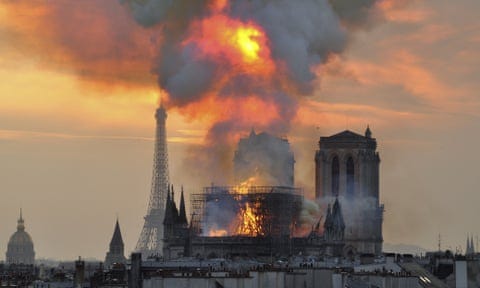
That asymmetry felt absolute. It shaped how we think about value, preservation, loss.
Last week, a global variable scoped wrong in concurrent code. Resolved to null. System started writing data it shouldn’t have. The fix took minutes. The cleanup took days.
Why We Preserve
This asymmetry shaped everything in software. Why we document obsessively. Why we maintain systems long past their usefulness. Why we fear loss so deeply that we over-engineer for durability.
Months to ship a feature. One bad deploy to corrupt production data.
The economics made sense. Construction was expensive, destruction was cheap, so you protected what you built. You wrote documentation because rebuilding from scratch was unthinkable. You maintained legacy systems because replacement cost exceeded maintenance cost. You hoarded institutional knowledge because losing it meant losing capability.
AI Reverses the Equation
Construction is approaching destruction speed.
When I can regenerate a component in minutes instead of days, the calculation changes. Regeneration becomes a viable alternative to preservation. The asymmetry that governed every decision about what to build, what to maintain, what to document... it stops governing.
I wrote about ephemeral software a few months back. The stuff you build knowing you’ll throw it away. That was a symptom of this deeper shift. When rebuild cost drops 100x, you stop being precious about what you’ve built.
What Dies With the Asymmetry
Maintenance as primary concern. Maybe.
Technical debt as existential threat. Maybe.
Institutional knowledge in its current form. Almost certainly.
If you can regenerate from context plus intent, what are you actually preserving? The answer isn’t “nothing” but it’s different than what we’ve been preserving.
Not the code. The intent, constraints, relationships. AI loves primitives. Schemas. Interfaces. Contracts. Examples. These are the things that let you regenerate, not the things you generated. Preservation shifts from artifacts to inputs.
I’m finding that a well-structured schema and a few representative examples gets me further than pages of documentation about the system that uses them. The documentation describes what was built. The primitives let you rebuild it.
Organizational Shift
Teams are built around preservation. Documentation writers. Knowledge base maintainers. The long onboarding process. The careful handoffs. The “you need to talk to Sarah, she knows how that system works.”
What happens when reconstruction beats preservation?
The skill becomes designing things that are easy to rebuild, not things that last. Different goal entirely.
Onboarding changes. If you can understand a codebase in minutes, the three-month ramp-up becomes a relic. Code review changes. Due diligence changes. M&A technical assessment changes.
The premium on “knowing the system” collapses. Not to zero. Context still matters. But expertise shifts from accumulated context to the ability to acquire context fast and act on it. The person who’s been here five years loses their moat. The person who can orient quickly and synthesize gains one.
Looking Forward
Notre Dame needed craftsmen who remembered. Artisans who understood techniques passed down through generations. That knowledge couldn’t be regenerated. It had to be preserved in people.
Your codebase needs primitives that explain. Schemas, contracts, examples, constraints. The things that let reconstruction happen. Different preservation for different economics.
I don’t think this means we stop caring about quality or durability. It means we care about different kinds of durability. Not “will this code survive?” but “can this be rebuilt?” Not “did we document what we built?” but “did we capture why we built it?”
The asymmetry isn’t gone. Data still burns. State still corrupts. The code is fixable. The state is archaeology. But the balance has shifted. Construction got cheaper. And that changes what’s worth protecting.